
Most traders who fail a prop firm challenge don't fail because they lost money, they fail because they broke a rule while they were still profitable. The two rules that end accounts the fastest are the daily loss limit and the max drawdown cap, and both can trip an otherwise solid account on a single bad session. A funded account reset usually costs less than a new challenge fee, but reading the rule sheet before your first trade costs nothing. Knowing the exact numbers on your account, not the general idea of them, is what keeps a good trading day from turning into a breached one.
Table of Contents
The Rules That Actually End Your Challenge
Every prop firm challenge is built on the same four pillars, even if the numbers shift by firm. The daily loss limit resets at the start of each trading day and most firms count open floating losses against it, not just closed trades. That means a position sitting underwater at the cutoff time can breach you even if you never hit sell.
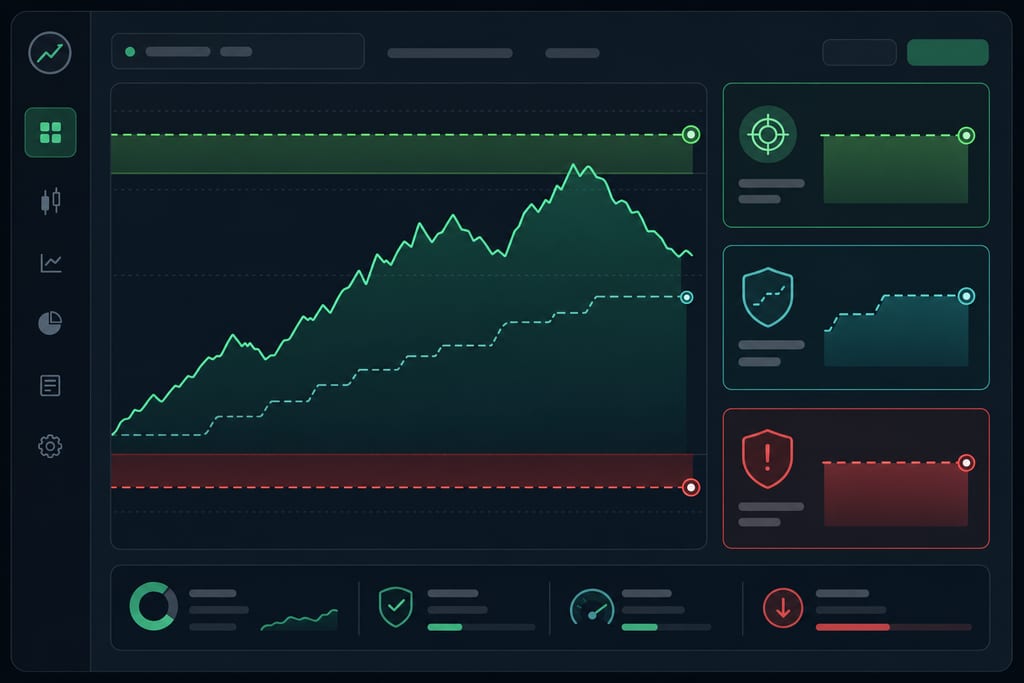
Max drawdown works differently depending on the firm. A static drawdown stays fixed from your starting balance, while a trailing drawdown climbs with your highest equity point and never gives that room back. Mixing up static and trailing math is one of the fastest ways to misjudge how much room you actually have left.
Profit targets usually sit between 8% and 10%, paired with a minimum number of trading days so nobody blows through the target in one lucky session. Consistency rules cap what one single day can contribute to your total profit, often around 20% to 50% of the total gain, so a single home-run trade can actually work against you.
- Daily loss limit: resets daily, includes open losses
- Max drawdown: static or trailing, set by the firm
- Profit target: typically 8-10%, with minimum days required
- Consistency rule: caps one day's share of total profit
Violations That Catch Traders Off Guard
Some breaches happen even when a trader thinks they followed every rule. Overnight and weekend holding restrictions apply on certain account types, and holding a futures or crypto position past the cutoff can trigger an automatic violation regardless of how the trade performs.
News trading blackout windows block entries for a set number of minutes before and after high-impact releases like CPI or NFP. Placing a trade inside that blackout window counts as a violation even if the trade is profitable.
Many firms calculate drawdown on a floating basis, meaning it updates tick by tick instead of only at the close. A trader watching their end-of-day balance can miss an intraday dip that already breached the account hours earlier.
- Check if overnight and weekend holds are allowed on your account type
- Confirm the blackout window length around major news releases
- Know whether drawdown is floating or end-of-day only
- Size positions against account balance, not against your usual size
Oversized positions relative to account size also draw risk flags even on winning trades, since firms watch exposure as closely as outcome.
Building a Routine That Keeps You Compliant
Staying inside the rules comes down to habits you repeat every session, not a one-time read of the rule sheet. Set a personal stop-loss tighter than the firm's daily loss limit so a normal bad day never gets close to the actual cutoff.
Watch this breakdown on staying compliant while still pushing toward the profit target.
Tracking running drawdown in real time matters more than estimating it at the end of the day, since floating calculations can move against you mid-session. Reviewing past sessions for near-violations shows patterns, like a habit of adding size after two losses, before that habit causes a real breach.
- Set a personal daily stop tighter than the firm's limit
- Track drawdown live instead of checking it once at close
- Review sessions weekly for near-miss patterns
- Flag repeat risk habits before they become violations
MyTraderScore's AI report reads a trader's CSV exports and flags discipline and risk patterns directly, which can surface the exact habit behind a near-violation before it turns into a breached account.
Check Your Numbers Before You Place Another Trade
Open your account dashboard right now and write down your exact daily loss limit and max drawdown figure, not the rounded version you remember from sign-up. Set your own stop a notch tighter, say 80% of the firm's daily limit, so a rough session never puts you near the real cutoff. Then pull your last ten trading days and look for the habit that keeps showing up before a bad stretch, like sizing up after a loss or holding into news. MyTraderScore can do that review from your CSV export in minutes instead of a weekend. A clean pass comes from catching that pattern this week, not after a reset.
Stop losing trades and start making more money.
Start freeProp Firm Challenge Questions Traders Ask
Does a platform outage that causes a loss count against me?
Yes, most firms hold you to the account balance their system recorded, not what caused the move. A dropped connection or a frozen chart does not pause the drawdown calculation. If an outage happens, screenshot the timestamp and contact support right away, since some firms review disputes case by case, but the account rules still apply while you wait for an answer.
Can I switch strategies partway through a challenge without starting over?
Yes, nothing in a standard challenge locks you into one strategy. Firms grade your account against the daily loss limit, drawdown, and profit target, not the setup you use to get there. Switching from scalping to swing trades mid-challenge is allowed as long as every trade still respects the same risk limits on your account.
Will one big winning trade get flagged even if my losses stayed small?
Yes, a single oversized win can trip the consistency rule even with clean risk management otherwise. Firms track what share of your total profit came from one day, and a lucky trade that makes up most of your gain can fail that check on its own. Spreading gains across more trading days keeps that ratio from drawing attention.